Plan a Food Crawl Everyone Talks About
Use this playbook to discover every restaurant worth tasting together, from hotpot nights to dessert runs—plus what to order and how to plan.
You know that moment in the group chat when someone says, “Let’s eat,” and the next 47 messages are… absolutely nothing helpful? One person wants ramen, another wants “somewhere vibey,” someone else is “down for anything,” and suddenly you’re all starving, scrolling, and settling. If your goal is to discover every restaurant worth tasting together, you don’t need more options—you need better shortlists, smarter pacing, and a clear idea of what makes a place truly worth the group’s time.
This is the playbook we use when we’re planning meals that feel like an event: the kind where the table is loud, the photos are immediate, and everyone leaves with a new favorite dish.
How to discover every restaurant worth tasting together (without burnout)
The secret isn’t trying every new opening or chasing whatever’s viral this week. It’s building a repeatable system that filters restaurants by what actually matters for shared dining: dishes that land across different palates, a setting that can handle groups, and an experience that feels unmistakably “we should bring the crew here.”
Start by separating “good” from “group-great.” A lot of restaurants are solid for a date or a solo bowl of noodles; fewer can carry a table of six with different spice tolerances, budgets, and appetites. When you’re choosing, look for menus designed for shared ordering—hotpot, Vietnamese family-style spreads, Japanese izakaya plates, kopitiam classics, street food markets, and dessert cafes with a lineup you can split.
Then add one more filter: the place should have at least one signature item that’s instantly tellable. Not just “the food was good,” but “the bone broth hotpot was ridiculous,” or “the bánh xèo cracked like a potato chip,” or “the soft-serve swirl tasted like toasted coconut and childhood.” That’s how a restaurant earns repeat visits—and referrals.
The “three yeses” test
Before you lock it in, ask three quick questions. First: can the group order widely without regret (options for spice levels, proteins, and at least one vegetarian-friendly choice)? Second: is the restaurant built for a shared vibe (tables that can handle plates, not just tiny two-top intimacy)? Third: does it have a headline dish that everyone will insist you order? If you get three yeses, you’re not gambling—you’re curating.
Build your shortlists by occasion, not cuisine
Cuisine matters, but occasion decides whether a place feels like a win. The same crew that loves a chaotic street food night might want something quieter for a birthday. If you organize your “want to try” list by what the night is supposed to feel like, you’ll make decisions faster and get fewer “ehh wherever” replies.
The loud-and-happy table (hotpot, barbecue, and big platters)
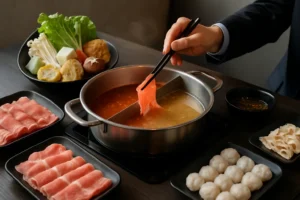
For groups, this is the cheat code. Hotpot and barbecue create built-in entertainment, and the pacing is forgiving—people arrive late, still eat well, and nobody feels rushed. Your best picks in this lane have strong broth options, sauce bars that feel like a playground, and protein selections that make the table go silent for a second.
When you’re ordering, aim for contrast: one comforting base (like a rich bone broth), one punchy option (spicy, herbal, or tangy), then a mix of textures—thin-sliced meats, mushrooms, tofu, and one “wow” add-on like hand-pulled noodles or seafood. The trade-off is cost: these meals can climb fast. If your group is price-sensitive, choose spots with set menus, weekday promos, or clear “feeds 4–6” bundles.
The “let’s catch up” meal (Vietnamese, noodles, and family-style comfort)
This is where you go when you want a guaranteed good time without the production. Vietnamese food is a social dining gem because it hits bright, fresh, and satisfying all at once. A smart order balances one brothy anchor (pho or bún bò), one crispy centerpiece (bánh xèo or fried spring rolls), and one platter that invites sharing (grilled meats with herbs and rice paper).
The key is variety without chaos. Too many noodle bowls can feel like everyone eating separately. Mix in one or two shareable plates so the table feels connected, not just seated nearby.
The “we want to try everything” night (izakaya, tapas-style Japanese, street food)
If your crew loves ordering rounds, Japanese izakaya-style spots are unbeatable. The best ones make it easy to build a table: skewers, small plates, rice dishes, and something fried that disappears first. Street food markets can scratch the same itch, but you trade comfort for novelty—more walking, more waiting, more “I’ll save you a bite.”
For a smoother group night, pick street food-style venues with centralized seating and clear stall navigation. If it’s a true open-air market, set a meeting point and agree on one rule: everyone brings back one item the table wouldn’t have chosen on its own.
The sweet-finish crawl (dessert bars, bakeries, and late-night cafes)
Dessert is the social equalizer. Not everyone wants a full meal; almost everyone wants “a few bites.” The best dessert spots for groups offer shareable formats—shaved ice mountains, toast towers, assorted pastries, or tasting flights. Your ordering strategy here is simple: one creamy, one fruity, one chocolatey, and one wildcard.
Timing matters. Go too early and you’ll spoil dinner. Go too late and the best items sell out. The sweet spot is 60–90 minutes after the main meal, with a short walk in between so the night feels like a mini adventure.
What “worth tasting together” really means
Some restaurants are delicious but not memorable. The ones worth tasting together have at least two of these qualities: a signature dish that feels iconic, a sense of place (you couldn’t mistake it for a generic chain), and a menu that rewards sharing. Bonus points if the staff is used to groups and can guide you without upselling you into regret.
Also: don’t ignore comfort logistics. Parking, wait times, and noise levels aren’t boring details—they’re the difference between “we should do this again” and “never again on a Friday.” If the restaurant doesn’t take reservations, choose it for an off-peak hang. If it’s famously slammed, make it a weekday victory instead of a weekend headache.
The trade-off: hidden gems vs. guaranteed hits
Hidden gems are thrilling, but they’re riskier for big gatherings. Small kitchens can get overwhelmed, service can be inconsistent, and your group’s patience may not match your curiosity. For birthdays, out-of-towners, or any night where you need a sure thing, lean toward established favorites with a track record.
Save the experimental picks for smaller groups—two to four people who genuinely enjoy the “let’s see what happens” energy. Then, once it proves itself, graduate it to the full crew.
The group ordering strategy that makes everyone happy
If you’ve ever watched a table over-order three identical items and forget vegetables exist, you already know the pain. The best group meals feel abundant but intentional.
Here’s the approach: pick one anchor dish that defines the place (the signature), two supporting dishes that cover different flavor directions (one rich, one bright), and one “texture dish” (crispy, chewy, or creamy). If the menu is huge, cap the first round, then reorder what you love. That keeps the table from spiraling into waste and food coma.
If your group has mixed dietary needs, handle it upfront. Ask who can’t do pork, who needs vegetarian, and who’s sensitive to spice. Then order so nobody’s stuck eating plain rice while everyone else feasts. This isn’t about being fussy—it’s about making the night feel inclusive, which is the real reason group dining works.
Turn restaurant discovery into a repeatable ritual
You don’t have to treat each outing like a one-off decision. The most fun groups build traditions. Maybe it’s “new spot once a month,” or “hotpot when it drops below 50,” or “dessert after karaoke, always.” When discovery becomes a ritual, you stop asking, “Where should we go?” and start asking, “What are we feeling tonight?”
A simple trick: keep a shared note with three sections—“must-try,” “already loved,” and “retry for one dish.” The third category is underrated. Some restaurants are worth revisiting purely for one item, and that’s a totally valid reason to go back. Not every outing needs to be a brand-new location to feel exciting.
If you want curated inspiration that reads like a friend with strong taste and zero patience for mediocre meals, we publish restaurant spotlights and share-ready picks at JomEatDeluxe.
Make the night shareable on purpose
The best meals with friends are stories with snacks. Choose places with a little theater—sizzling platters, tableside pours, broth that perfumes the room, desserts that arrive like a centerpiece. That doesn’t mean you need gimmicks; it means you’re choosing restaurants that understand people come to feel something, not just get full.
And here’s the move that changes everything: assign roles. One person picks the restaurant, one person picks the “non-negotiable dish,” and one person picks the after spot (dessert, drinks, or a walkable stop nearby). Decision fatigue disappears, and the group chat stays fun.
Plan for one great bite you’ll all remember, not ten that blur together. When the food is that good, you won’t need to convince anyone to go out again—the next plan basically writes itself.